Maj. Gen. (Dr.) Prof. Fahad Khalifa Al-Khalifa
MB.BCh.BAO.LRCP&SI, MSc (RCSI-MUB), FRCS (Canada), FRCS (Ireland)
Commander of the Royal Medical Services
Professor of Surgery, RCSI-MUB | Consultant Orthopaedic Surgeon & Upper Extremity Specialist
Orthopaedic surgery has never been simply about treating a fracture, replacing a joint, or repairing a tendon. At its heart, it is about something far more fundamental: restoring movement, relieving pain, and helping patients return to the lives they want to live. Since beginning his career in orthopaedics in 1998, Prof. Maj. Gen. (Dr.) Fahad Khalifa Al-Khalifa has witnessed and spearheaded remarkable advances across the specialty. Over more than two decades, his practice has encompassed sports injuries, upper-limb surgery, arthroscopic procedures, trauma, and joint reconstruction, together with extensive experience in hip and knee arthroplasty, complex revision surgery, and strategic military healthcare leadership.
A Calling Built Around Movement and Leadership
The decision to pursue orthopaedics was shaped by a deep appreciation for the unique combination of medicine, anatomy, biomechanics, and practical problem-solving. The musculoskeletal system is remarkably complex—bones, joints, muscles, tendons, and ligaments work together as an integrated mechanical system, where even a small disruption can have a profound effect on independence and quality of life.
Prof. Fahad’s journey in medicine began with his qualifications from the Royal College of Surgeons in Ireland (RCSI) in Dublin. He went on to complete his orthopaedic surgery residency at the University of Toronto, obtaining his Fellowship of the Royal College of Physicians and Surgeons of Canada (FRCS Canada), followed by a specialized Upper Extremity and Trauma Fellowship at Sunnybrook Trauma Hospital in Toronto. He later earned a Master’s degree in Health Care Management from RCSI-MUB.
Alongside his surgical commitment, Prof. Fahad has dedicated a significant portion of his career to military medical leadership and institutional governance within the Kingdom of Bahrain. Having served as Head of the Orthopaedic and Neurosurgery Department, Chairman of the Trauma Centre, Chairman of the Operating Theatre, and Chief of Medical Staff at the BDF Royal Medical Services Hospital, he currently serves as the Commander of the Royal Medical Services. Concurrently, as Professor of Surgery at RCSI-MUB and Chairman of the AO Foundation in Bahrain, he remains actively engaged in academic leadership, research supervision, and the education of medical students and surgical trainees.
The Core Philosophy: Treating the Patient, Not Just the X-Ray
Despite two decades of rapid technological evolution in surgical techniques, implants, and rehabilitation, one guiding principle has remained constant throughout Prof. Fahad's practice: the patient always comes first.
Orthopaedics has traditionally relied heavily on clinical examination and imaging, such as X-rays, CT scans, and MRIs, to determine treatment. However, modern orthopaedic care requires far more than identifying an abnormality on an image. Two patients may present with identical X-rays but have completely different symptoms, lifestyles, and functional expectations. One individual may simply wish to walk comfortably around the house or sleep through the night without pain, while another aims to return to golf, running, or competitive sport.
For Prof. Fahad, understanding what a patient is unable to do because of their condition—and what they hope to achieve after treatment—is an essential part of every consultation. Not every radiographic abnormality requires surgery, and treatment decisions must always account for the patient's individual priorities, functional limits, and medical circumstances. The consultation is therefore a partnership where clinical expertise meets patient goals.
Clinical Diversity: From Complex Trauma to Upper Limb and Revision Arthroplasty
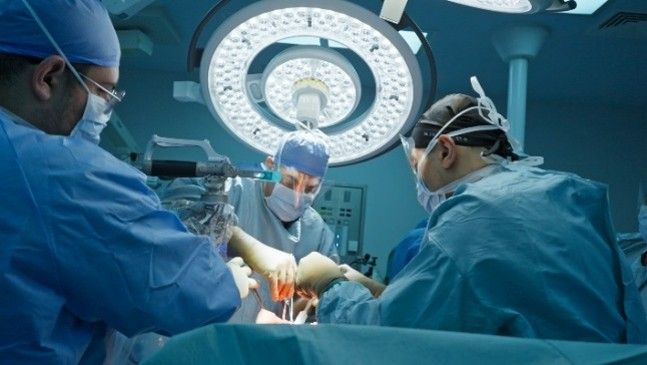
Prof. Fahad’s clinical practice spans both emergency and elective orthopaedics, reflecting a broad range of surgical expertise:
- Upper Extremity and Shoulder Surgery: Encompassing open and arthroscopic management of complex shoulder disorders, rotator cuff repairs, shoulder instability, nerve decompressions, and shoulder and elbow joint replacements.
- Sports Trauma and Arthroscopy: High-volume knee and ankle arthroscopic procedures, including anterior cruciate ligament (ACL) reconstructions and complex multi-ligament repairs aimed at preserving joint function.
- Trauma and Reconstruction: Meticulous acute fracture fixation using locking plates, intramedullary nails, and external fixators, as well as late reconstructive surgery for complex injuries and deformity correction.
- Joint Arthroplasty and Revision Surgery: Extensive experience in primary hip and knee arthroplasty, performing approximately 125 knee replacements annually. His practice includes complex revision knee and hip arthroplasty, addressing challenging cases involving prior implant failure, severe bone loss, scar tissue, or joint instability.
The Robotic-Assisted Revolution in Knee Arthroplasty
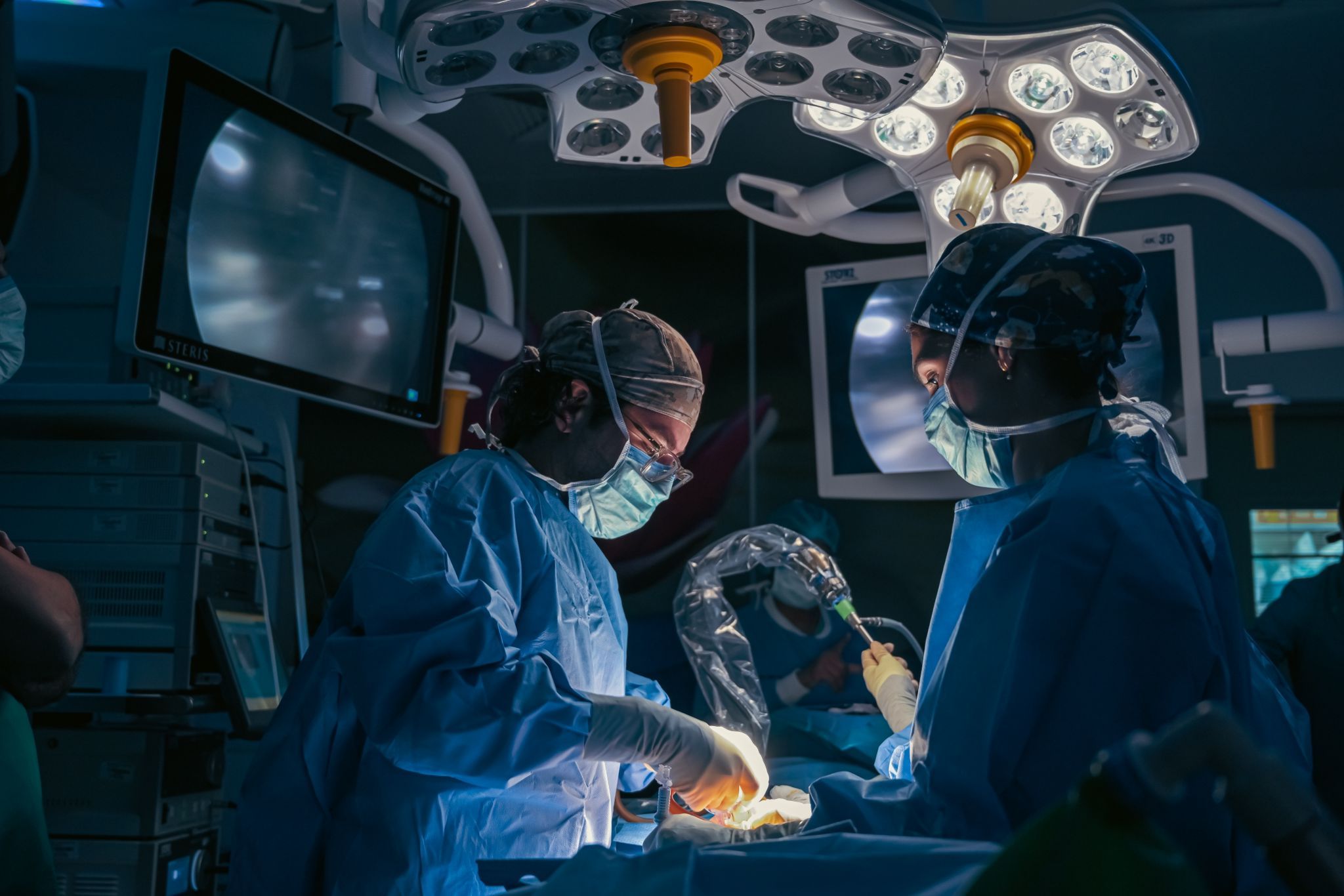
One of the most significant developments in modern orthopaedic practice is the integration of robotic-assisted total knee arthroplasty. Every knee is unique, with wide variations in bone morphology, limb alignment, deformity, and ligament balance. Conventional joint replacement techniques have helped millions, but robotic technology provides an unprecedented level of 3D digital planning, real-time feedback, and intraoperative precision.
Prof. Fahad emphasizes that robotic technology does not replace the surgeon. Instead, it serves as a sophisticated instrument that supports surgical expertise and judgment. The process begins with detailed pre-operative planning, while during surgery, the system provides real-time data to support precise bone preparation, implant positioning, alignment, and soft-tissue balancing tailored to the patient’s precise anatomy.
This transition from a standardized surgical approach to an individualized, data-driven procedure creates a vital synergy between experience and technology. Surgical experience provides the deep understanding of anatomy, pathology, and unexpected intraoperative challenges, while technology provides the precision to execute the surgical plan with high consistency.
A Lasting Measure of Success
The ultimate measure of surgical success extends beyond the sophistication of the operating theatre. For patients, success is measured by experiencing less pain, recovering mobility, and returning to the activities that bring purpose to their lives.
The most meaningful moments in an orthopaedic career occur in the clinic when a patient reports walking without pain, returning to a favorite sport, climbing stairs independently, or rediscovering daily life without chronic discomfort. The operation itself is only one milestone in the journey; the true goal is helping patients regain confidence in their movement.
Looking toward the future, orthopaedics will continue to integrate advanced imaging, data, robotics, artificial intelligence, and personalized planning systems. Yet, regardless of how advanced these tools become, their value remains anchored to a single purpose. As Prof. Fahad’s career across military leadership, academic education, complex trauma, and robotic surgery demonstrates, innovation is ultimately about giving the surgeon better tools to fulfill the core calling of orthopaedic medicine: Restoring movement, relieving pain, and reclaiming quality of life