Prof. Thamer Al Abbasi, FRCSC, FACS
Consultant General & Colorectal Surgeon
Chief of Surgery, MH- Royal Medical Services
“Every operation is an opportunity to help someone return to living the life they thought they had lost.”
For Prof. Thamer Al Abbasi, colorectal surgery is about far more than treating disease. It is about restoring independence, dignity, and the quality of life that many patients fear they have lost.
Many colorectal conditions affect the most fundamental aspects of everyday living—from eating and bowel function to physical comfort and confidence. Through safe, precise, and patient-centered surgical care, Prof. Al Abbasi’s mission is to help patients regain control over their lives and return to the activities that matter most to them.
Advancing Care for Patients with Ulcerative Colitis
Among the many conditions treated within the colorectal surgery program at Royal Medical Services, ulcerative colitis presents unique challenges. Chronic inflammation can lead to debilitating symptoms, malnutrition, repeated hospitalizations, and an increased risk of colorectal cancer.
One patient, in particular, reinforced Prof. Al Abbasi’s commitment to advancing minimally invasive and robotic colorectal surgery.
After years of severe ulcerative colitis that no longer responded to medical therapy, the patient had become profoundly malnourished and exhausted, with a dramatically reduced quality of life. Using a robotic panproctocolectomy with ileal pouch-anal anastomosis (IPAA), the diseased colon and rectum were removed while preserving intestinal continuity.
Following surgery, the patient was able to return to a normal life, free from the disease that had once dominated every aspect of daily living. Cases like this continue to reinforce Prof. Al Abbasi’s commitment to advancing minimally invasive and robotic colorectal surgery.
Overcoming the Challenges of Traditional Surgery
Historically, complex colorectal procedures often required large abdominal incisions, resulting in significant postoperative pain, prolonged recovery, lengthy hospital stays, and greater physical burden for patients who were already weakened by their condition.
Pelvic surgery presents an additional challenge. The pelvis is a narrow, confined anatomical space surrounded by critical structures where precision is essential to preserve function. Traditional surgical instruments can be limited in both movement and visualization, making these highly complex procedures even more demanding.
Precision Through Robotic-Assisted Surgery
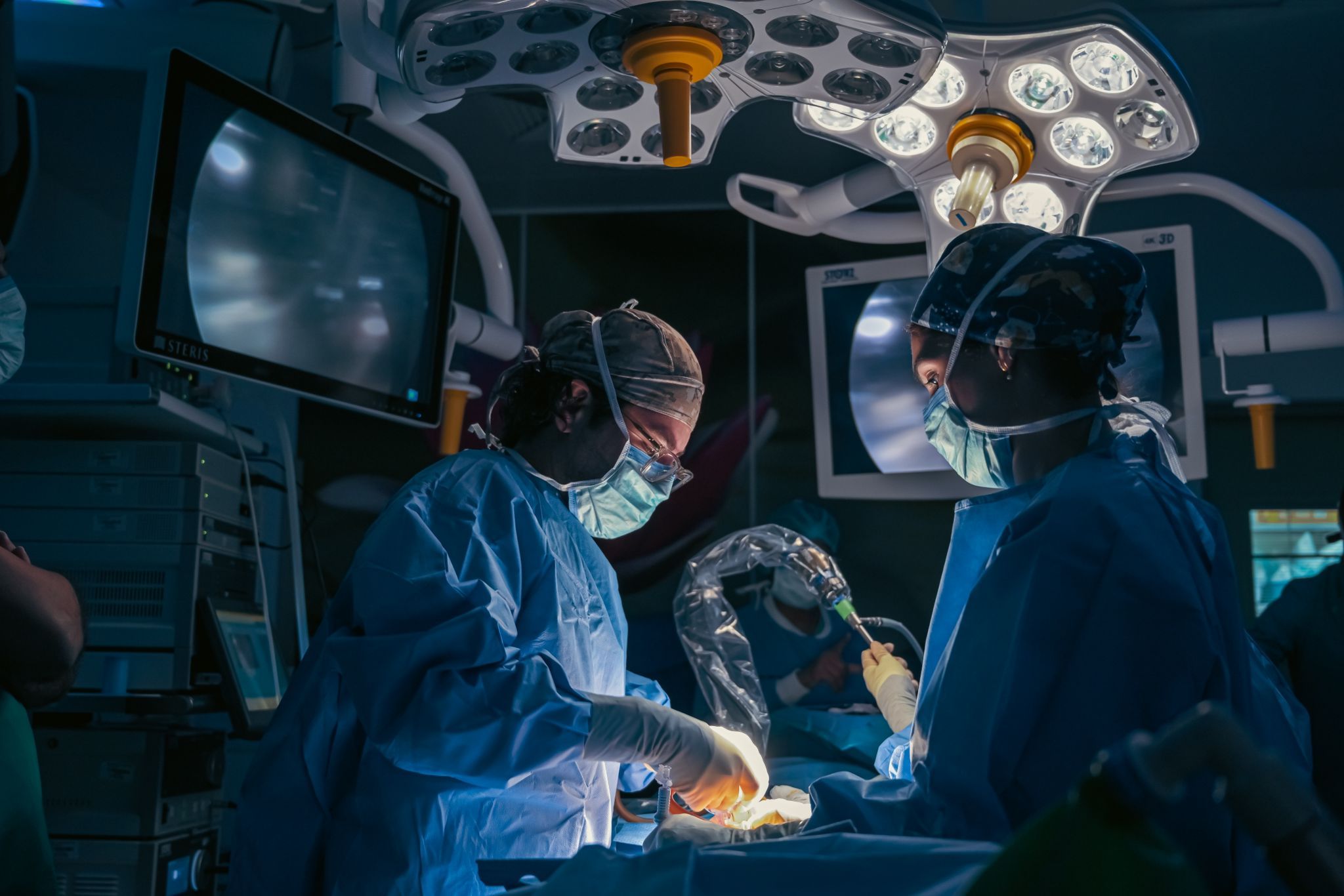
At Royal Medical Services, Prof. Al Abbasi utilizes advanced robotic surgical platforms, including the HUGO™ Robotic-Assisted Surgery system, together with state-of-the-art laparoscopic and fluorescence-guided technologies to enhance surgical precision and improve patient outcomes.
Robotic technology provides a stable, high-definition three-dimensional view and highly articulated instruments that move beyond the capabilities of the human wrist. This enables exceptionally precise surgery within confined spaces while minimizing trauma to surrounding tissues.
To help patients understand the procedure, Prof. Al Abbasi offers a simple comparison:
Imagine trying to repair a delicate watch through a keyhole. Robotic surgery allows the surgeon to operate through small incisions using miniature instruments and magnified vision, making complex procedures possible with extraordinary precision.
For patients with ulcerative colitis, this approach makes it possible to remove the diseased bowel while creating an internal reservoir from the patient’s own small intestine, allowing them to continue passing stool naturally without the need for a permanent stoma.
Supporting Recovery
Advanced minimally invasive techniques are changing not only how surgery is performed, but also when patients choose to undergo treatment.
Patients who may once have delayed surgery because of concerns about recovery can often proceed earlier, before further deterioration caused by malnutrition or ongoing disease complications.
Following surgery, many patients experience less pain, reduced blood loss, smaller scars, earlier mobilization, and a faster return to their normal daily activities.
Measuring Success Beyond the Operating Room
For Prof. Al Abbasi, success is not defined by the technical completion of an operation.
It is measured by what patients are able to do afterward.
Returning to work. Enjoying meals again. Spending time with family and friends without fear. Living without planning every day around a chronic illness.
These are the outcomes that define meaningful recovery and continue to drive innovation in colorectal surgery.
A Multidisciplinary Commitment to Better Outcomes
The success of complex colorectal surgery depends on close collaboration between multiple specialties.
At Royal Medical Services, Prof. Al Abbasi works alongside gastroenterologists, dietitians, anesthesiologists, radiologists, pathologists, physiotherapists, and stoma care nurses to deliver comprehensive care throughout every stage of the patient’s journey.
Complex surgery is never the achievement of a single individual. It is the result of a dedicated multidisciplinary team working together to achieve the best possible outcome for every patient.
Looking Ahead
Royal Medical Services remains committed to refining minimally invasive approaches for inflammatory bowel disease, rectal cancer, advanced pelvic surgery, and restorative procedures. For Prof. Al Abbasi, innovation is not defined solely by advances in technology. It is defined by helping patients return to the lives they thought they had lost.